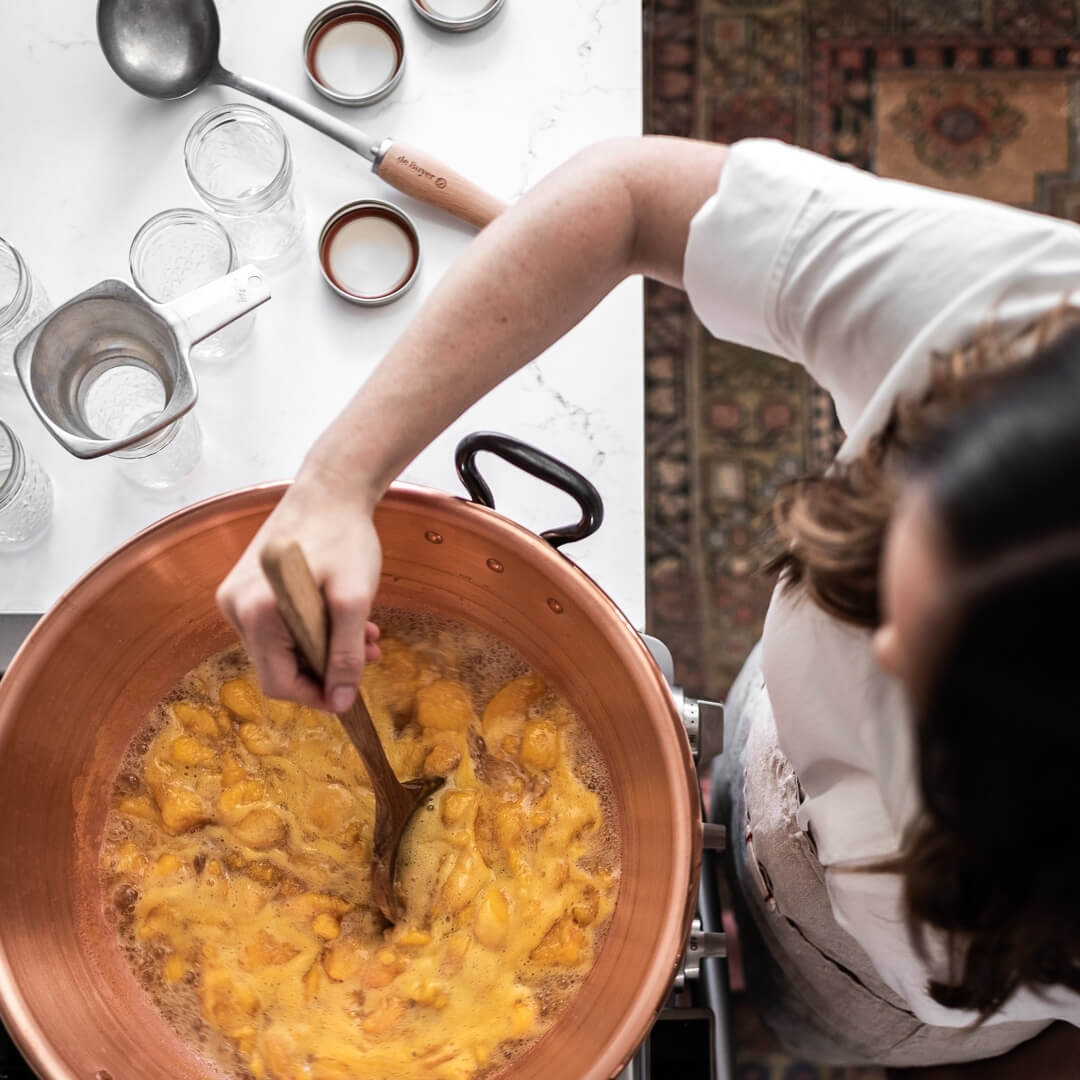
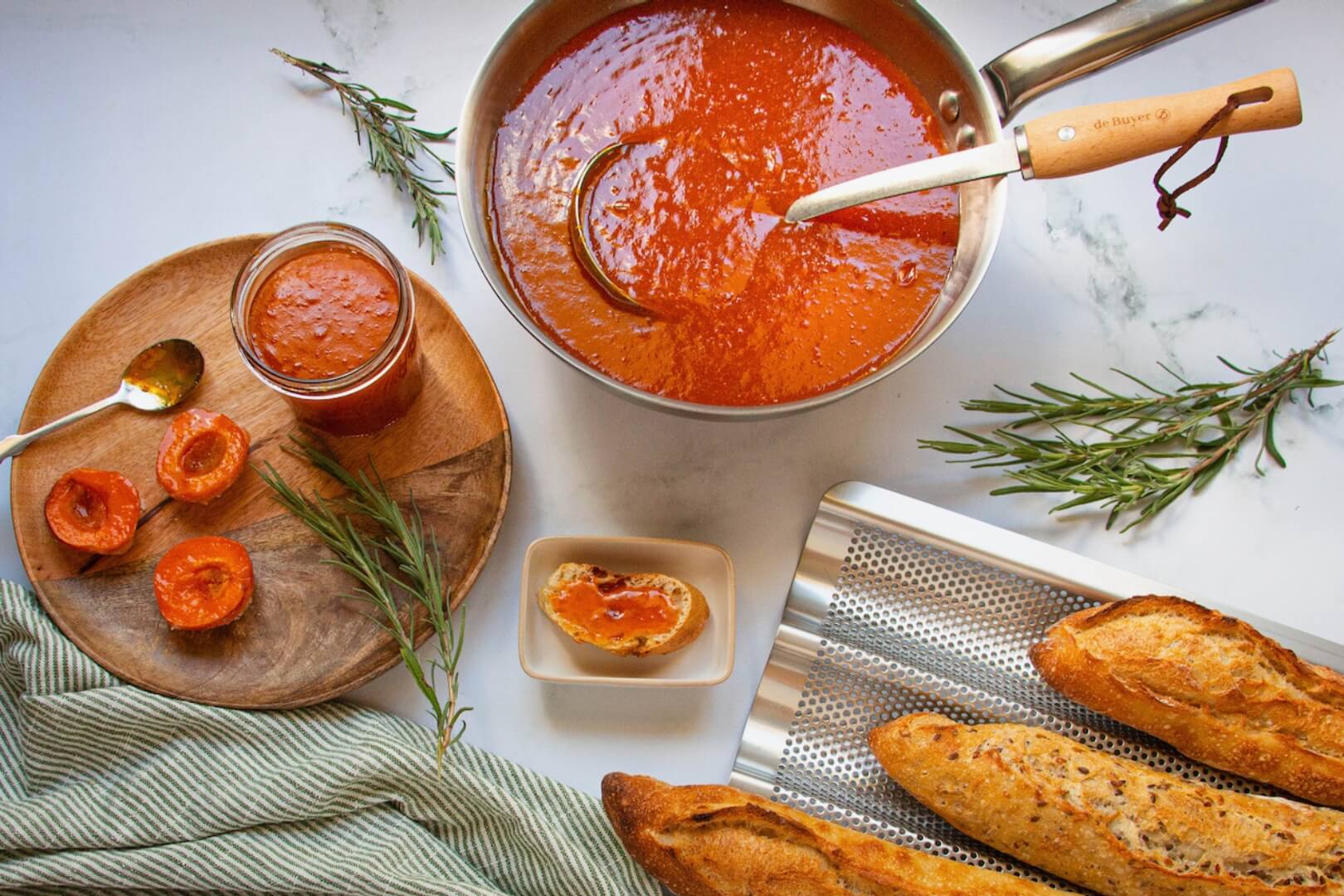
Summer is the perfect season to prepare a wide variety of jams—strawberries, apricots, peaches, and more. And quite often, we use a copper pan to cook our fruit. But why do we do this? That’s what we’re going to explain.
Renowned in professional kitchens, copper stands out as a noble material, prized for its many technical and aesthetic qualities.
Copper is the best conductor of heat, allowing for rapid and even temperature rise.
Copper cookware is highly valued in the culinary world for its excellent thermal responsiveness. This means that not only does it heat up quickly, but it also cools down just as fast. Copper is therefore the ideal material for precision cooking, such as working with sugar.
Beyond its technical advantages, copper has an undeniable edge over other materials: its unique and inimitable aesthetic. Its distinctive color gives it an elegant look that fits beautifully into any kitchen.
There are three key rules to follow when making jam. Keep these principles in mind to ensure delicious results. Temperature, evaporation, and pectin are the technical elements you need to master to become the king or queen of jam-making.
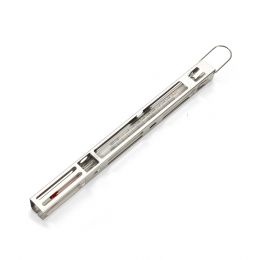
To achieve a delicious jam, two things are essential: the jam must reach a boil, and the temperature must not exceed 110°C (230°F).
Respecting this temperature is crucial to avoid caramelizing the fructose, which could compromise the natural flavor of the fruit.
Evaporation plays a vital role in jam-making, as it helps concentrate the sugar. This concentration allows the mixture to boil at a higher temperature.
Proper evaporation of the water contained in the fruit is ideal, as it reduces the need to add extra sugar to your recipe.
Fruits contain pectin, which is released during cooking. These molecules bond together to form a network that traps water and aromas in your mixture. Using a traditional jam pan encourages the bonding of pectin molecules, resulting in perfectly set and flavorful jams.
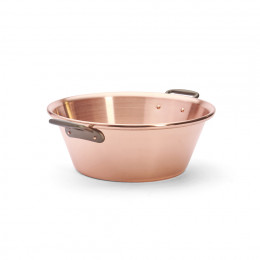
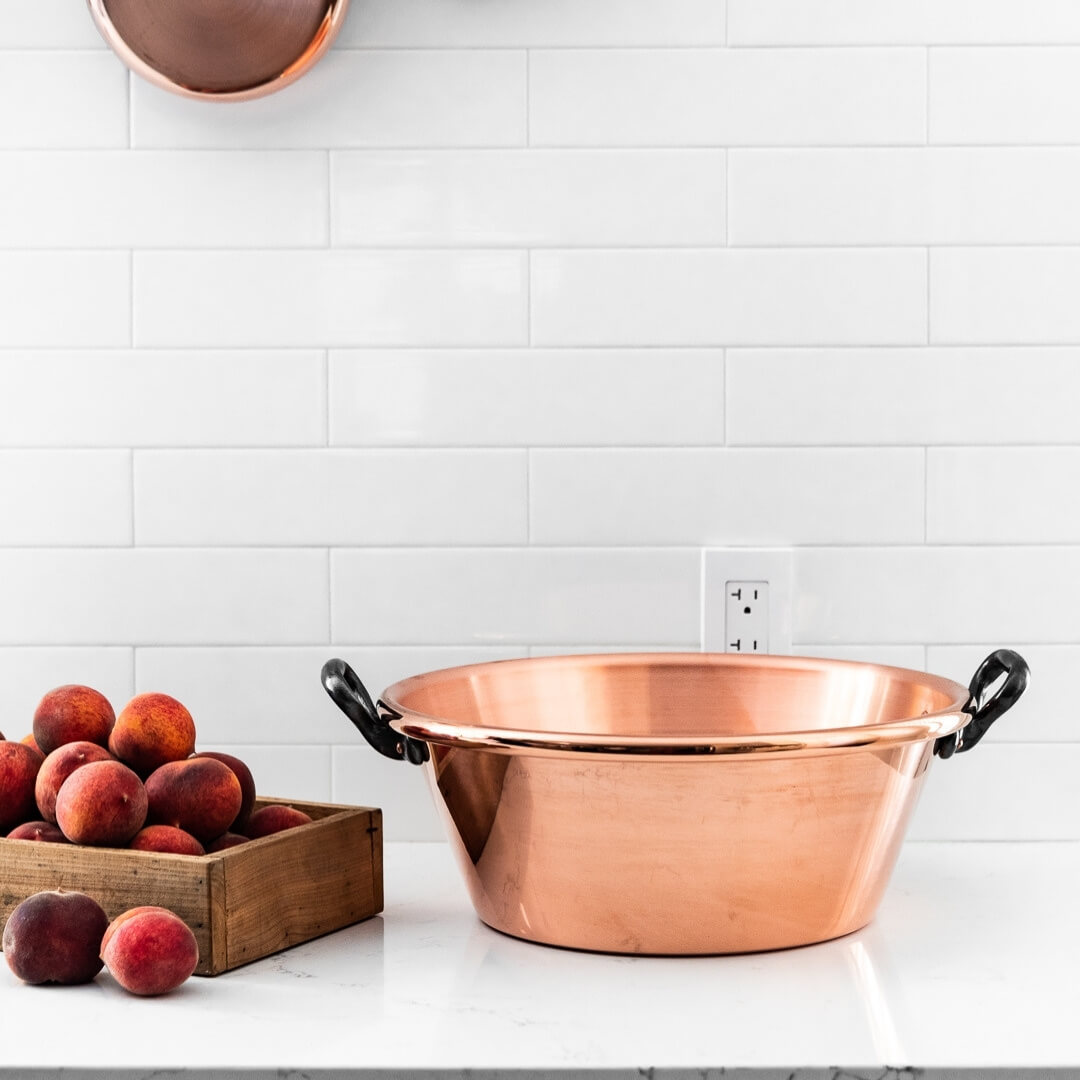
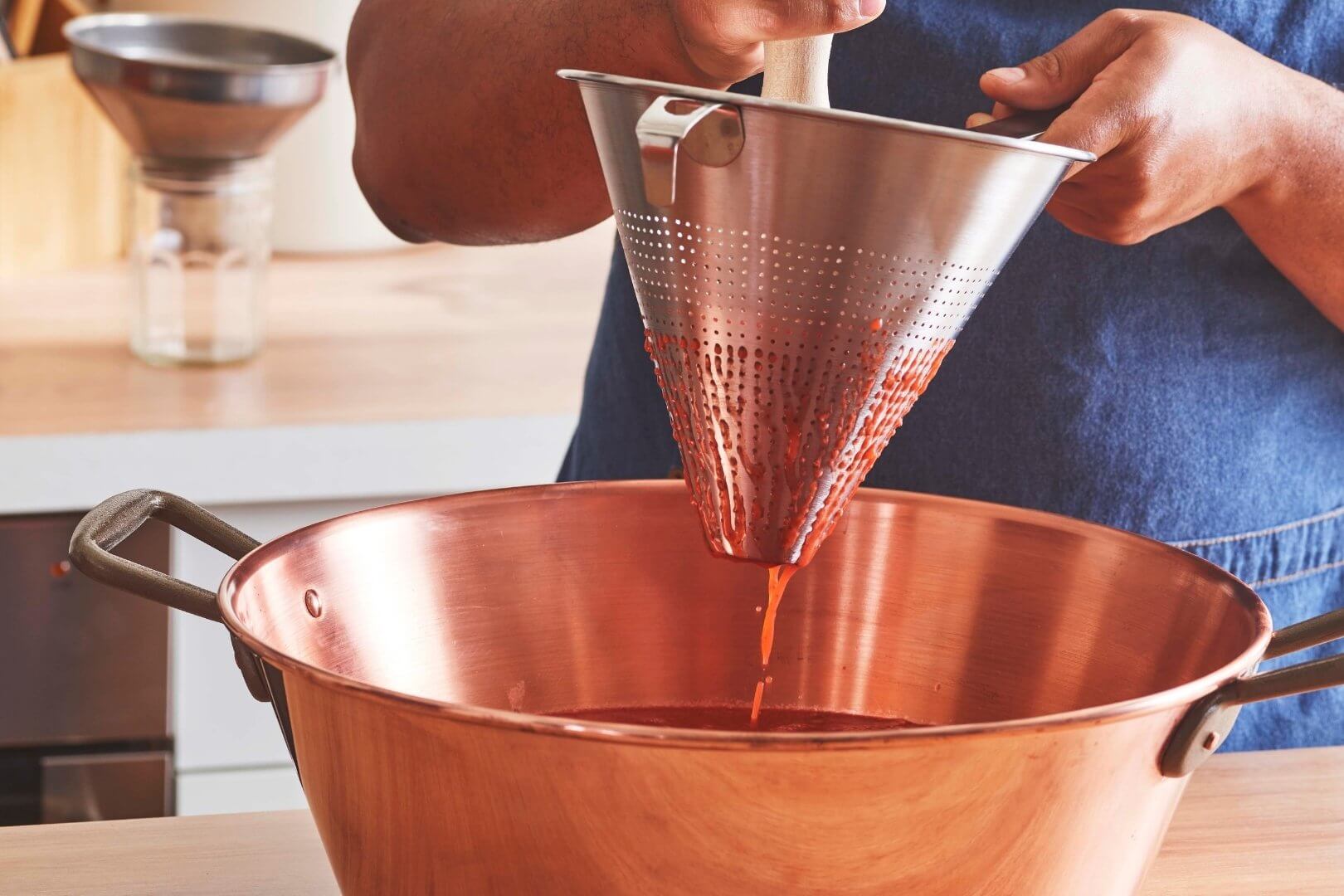
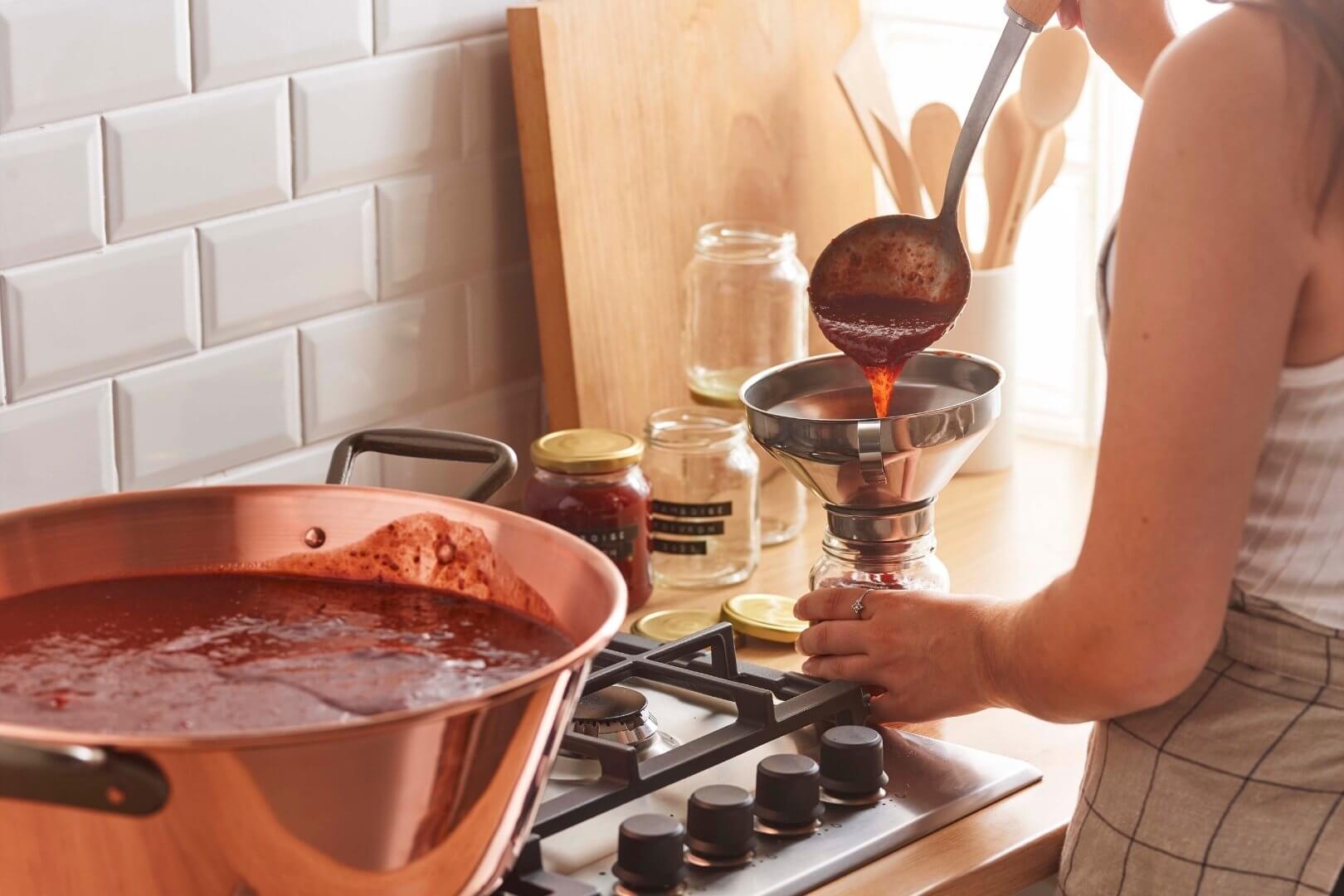
Now that we've covered the essentials of jam-making, it's time to focus on the copper jam pan—an indispensable tool in the process.
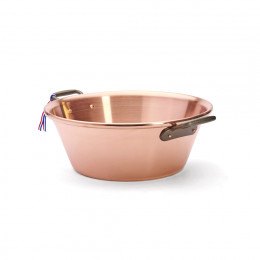
With a diameter of over 35 cm, copper jam pans offer a wide surface area for the evaporation of water contained in your fruit.
Copper is the best conductor of heat, ensuring your jam cooks evenly. It also allows for precise temperature control during cooking, reducing the risk of excessive caramelization.
You might not have suspected it, but copper actually promotes the bonding of long pectin molecules during fruit cooking. This is one of the many reasons we use a copper jam pan: thanks to copper, pectin can more easily “trap” the water and aromas in your fruit mixture.
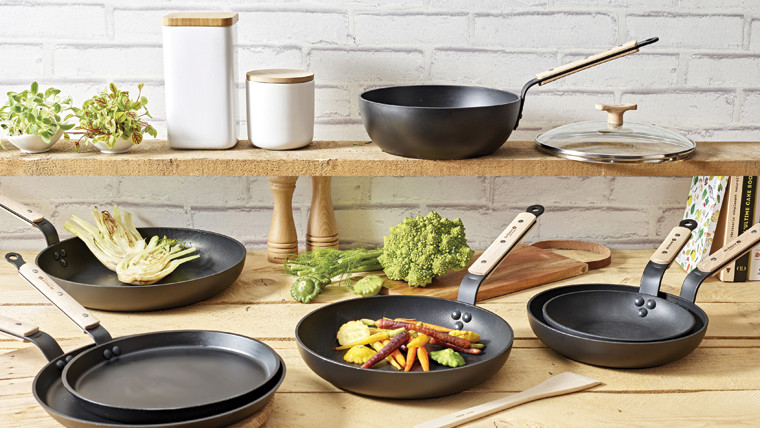
Steel is a natural, healthy, and durable material—provided it’s properly maintained. To understand why its care is so specific, it’s important to get to know steel a little better. Here are a few key facts about this material.