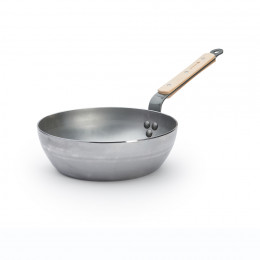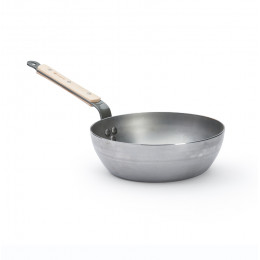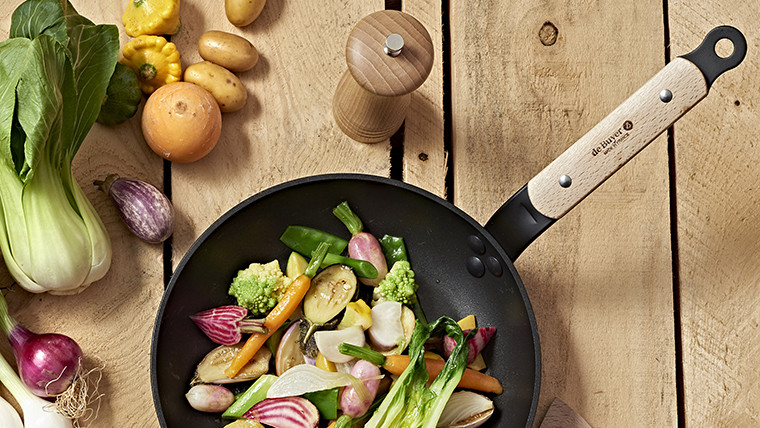

If professional chefs favor steel pans, it’s no coincidence. It’s the go-to tool for triggering the Maillard reaction, that magical phenomenon that transforms a simple piece of meat or a vegetable into an intense taste experience.
But beware: steel demands respect.
Used properly, it elevates.
Handled poorly, it disappoints.
Here’s how to get the best out of your De Buyer steel pan, with the right techniques at the right time.
The Maillard reaction: the secret to flavorful cooking
Before talking about equipment, let’s talk culinary science. The Maillard reaction is a chemical transformation between amino acids and the natural sugars in food under the effect of heat (above approximately 140°C).
The results are:
It’s the steel pan that delivers:
And this is precisely where the De Buyer steel pan excels.
Not all materials are equal when it comes to searing. Carbon steel has three key qualities:
Steel conducts heat quickly and allows it to reach the temperatures needed for the Maillard reaction. Where some pans “stifle” searing, steel creates real browning.
When you place food in the pan, the steel pan maintains its temperature thanks to its thermal inertia.
The heat stays stable, searing is immediate and even.
This is the key to triggering a true Maillard reaction.
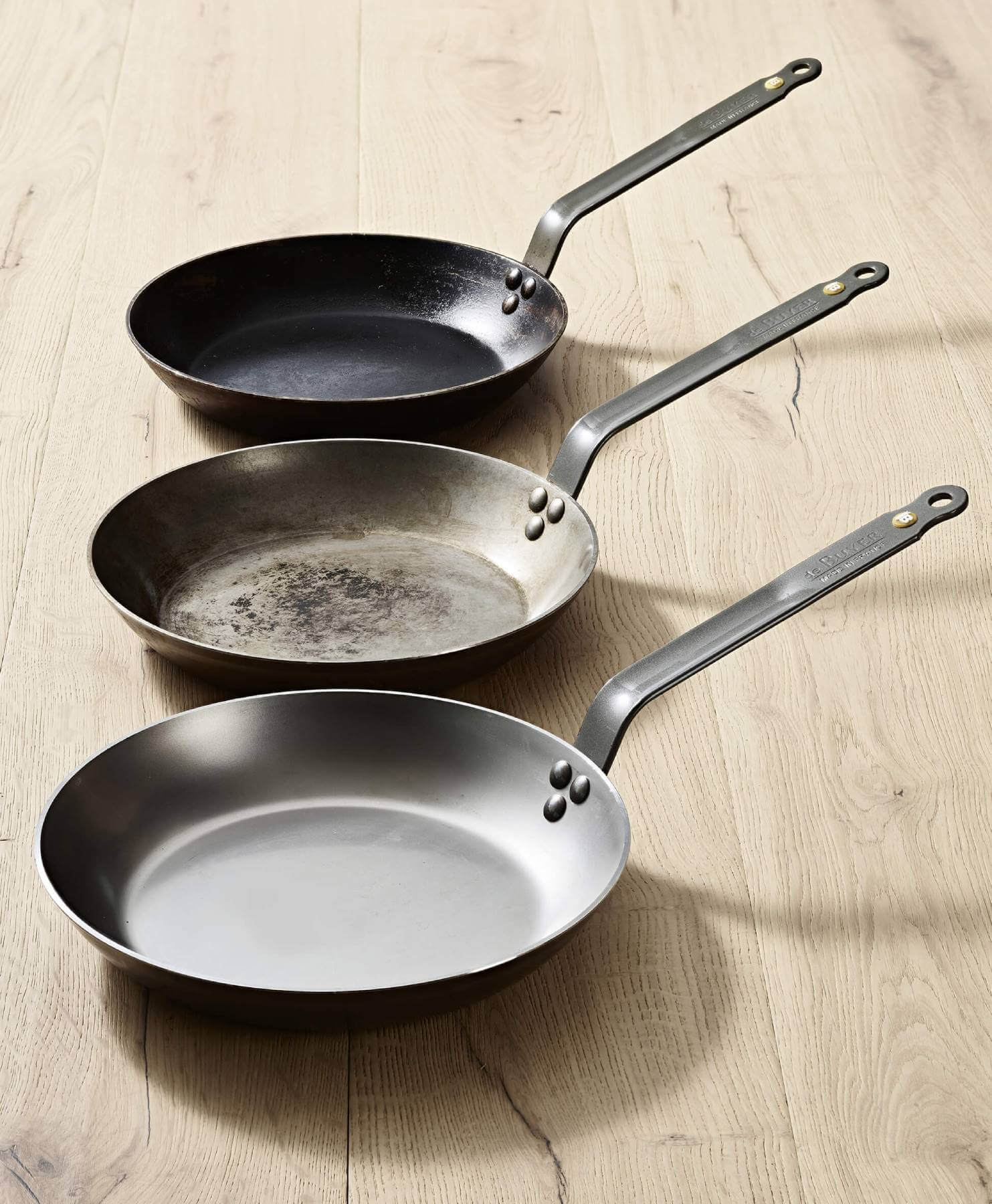
Contrary to popular belief, steel naturally becomes non-stick through seasoning. The more you cook… the more your pan becomes efficient. It’s a long-term companion, not a disposable item.
Here is the method every chef uses, and that you can easily replicate.
This is THE critical step. Place your De Buyer steel pan over medium-high heat. Let it heat empty for 2 to 3 minutes. Chef’s tip: drop a few drops of water into the pan. If they bead up and roll like lively droplets, the temperature is right. A pan that isn’t hot enough = no Maillard reaction.
Then add a thin layer of oil suitable for high-heat cooking (grapeseed, sunflower, etc.). The oil should become fluid and gently shimmering, not smoking. The goal is to create a uniform film between the food and the steel surface.
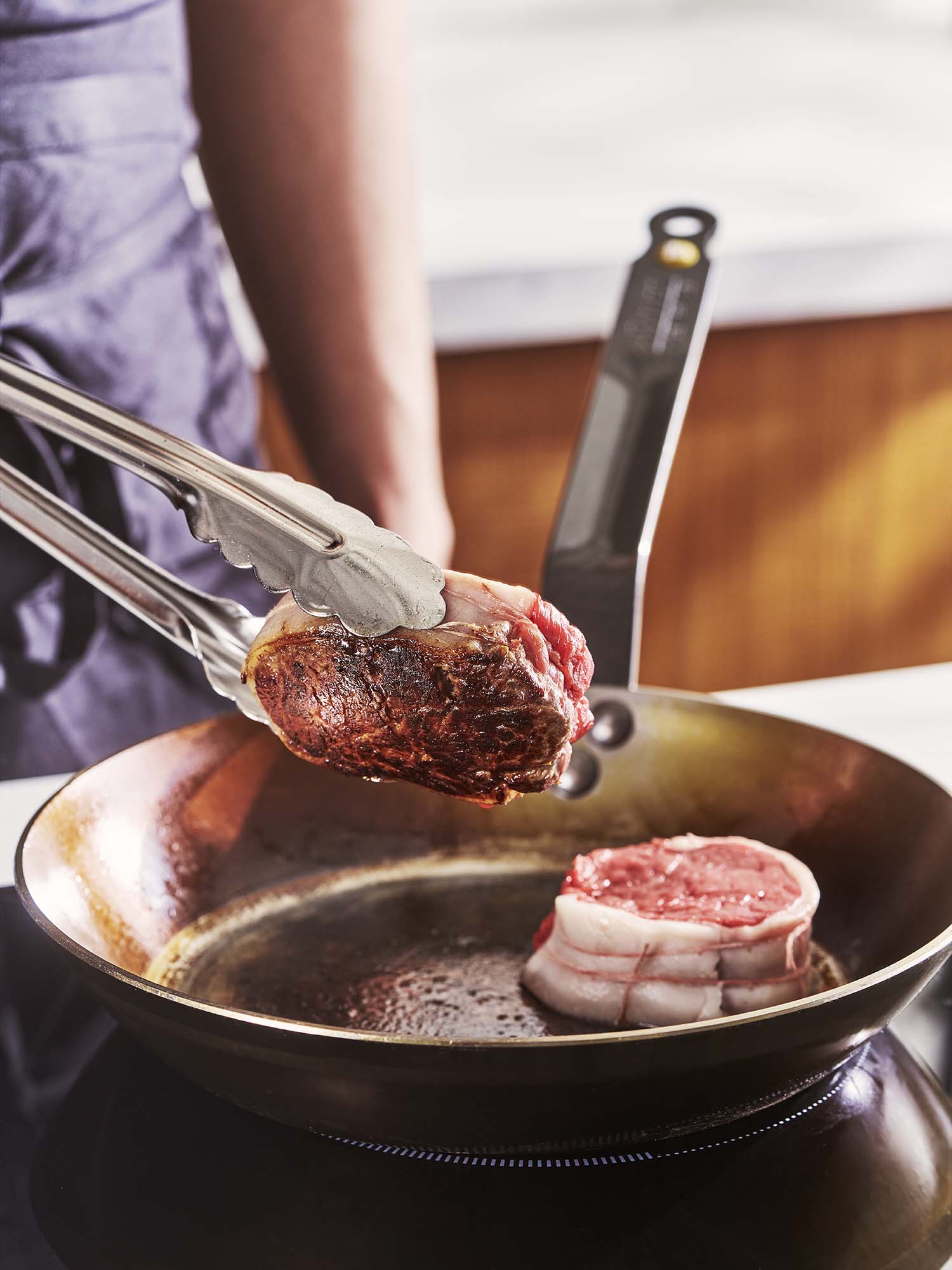
This is where many people go wrong. Place your meat or vegetables, then let it be. At first, the food may stick slightly. That’s normal—and even a good sign: the Maillard reaction is starting. After a few moments, the food will release naturally. Golden rule: if it resists, it’s not ready yet.
Once a beautiful crust has formed, the food releases easily, the color is even, and juices begin to develop. Flip only once for a perfect sear.
Cooking with steel is stepping into a living kitchen.
With use, the surface develops a patina, its natural non-stick properties improve, and flavors become more precise. It’s a tool that evolves with the cook’s skills. And that’s exactly why chefs remain loyal to it.
In summary, mastering the Maillard reaction means:
With a properly used De Buyer steel pan, browning becomes even, juices fully develop, and every dish gains character.
Technique makes the difference.
Steel reveals talent.
Steel is a natural, healthy, and virtually indestructible material when properly maintained. To understand why its care is specific, it helps to learn more about steel itself. Here are a few things to know about this material.